☁️ What is cloud ERP?
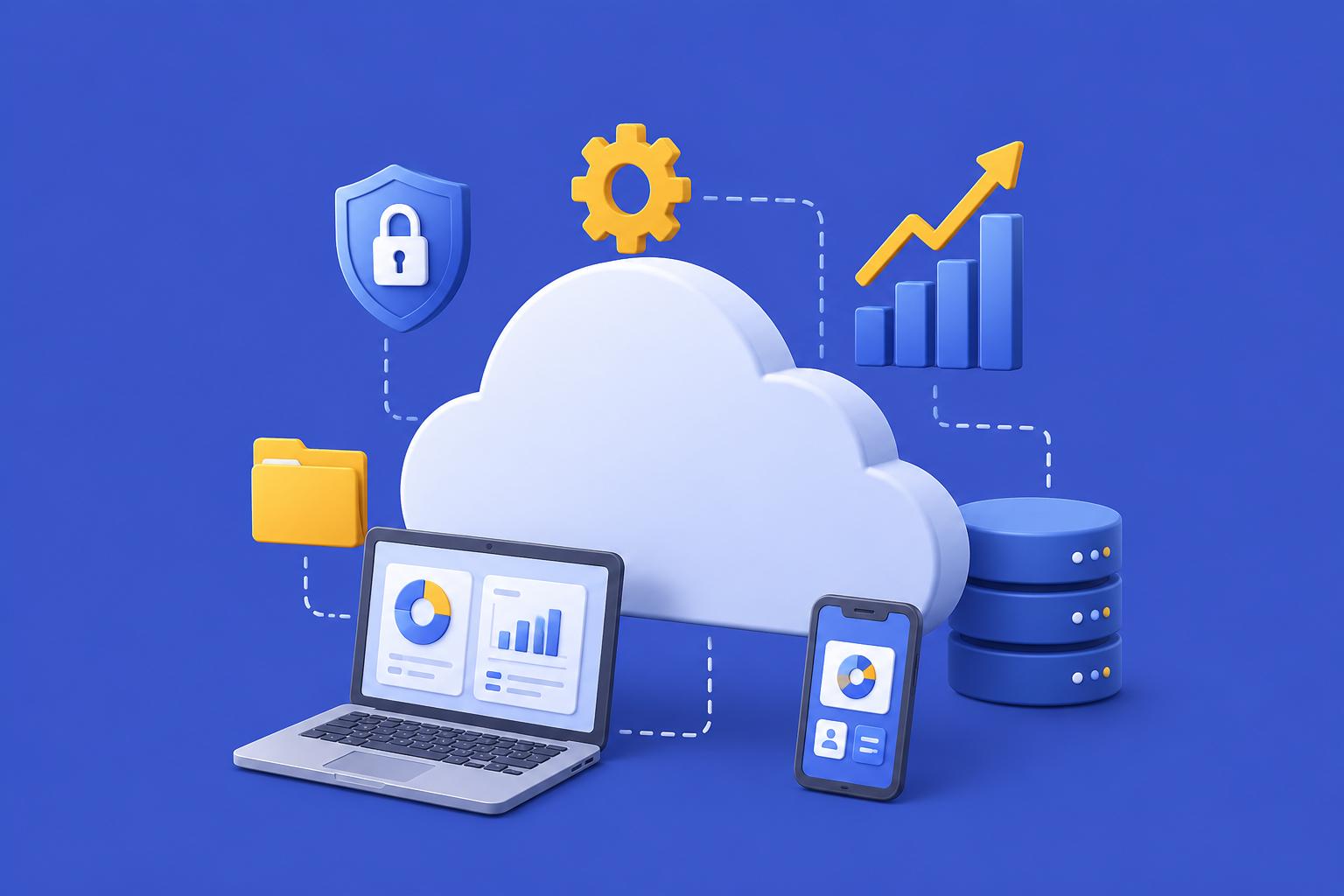
In today’s fast-paced business environment, efficient management of operations is essential for sustainable growth and competitiveness. Cloud ERP (Enterprise Resource Planning) is a business management system hosted in the cloud that enables companies to centralize and streamline key processes such as finance, inventory management, sales, procurement, production, and human resources.
Unlike traditional ERP systems that require on-premise servers and extensive IT infrastructure, Cloud ERP operates via the internet, providing businesses with greater flexibility, scalability, and accessibility.
🚀 Why are SMEs choosing cloud ERP?
Small and medium-sized enterprises (SMEs) are increasingly adopting Cloud ERP solutions because they offer powerful capabilities without the high costs associated with traditional systems.
💰 Lower Upfront Costs
One of the biggest advantages of Cloud ERP is the reduced initial investment. Businesses do not need to purchase expensive hardware, maintain servers, or hire dedicated IT personnel to manage the infrastructure. Instead, most providers offer flexible subscription-based pricing, making advanced business technology accessible to companies of all sizes.
⚡ Faster Implementation
Traditional ERP projects can take months to deploy. Cloud ERP solutions, on the other hand, can often be implemented much more quickly. This allows businesses to start benefiting from improved processes and real-time data in a shorter timeframe.
🌍 Access Anytime, Anywhere
With Cloud ERP, employees can securely access business information from any location using a laptop, tablet, or smartphone. This flexibility supports remote work, multi-location operations, and mobile teams, ensuring seamless collaboration regardless of where employees are based.
📊 Improved efficiency and productivity
A key benefit of Cloud ERP is the integration of all business functions into a single platform, creating a unified source of information across the organization.
🔄 Automated Business Processes
Many repetitive and time-consuming tasks, such as invoicing, order processing, inventory tracking, and reporting, can be automated. This reduces manual work, minimizes human errors, and allows employees to focus on higher-value activities.
📈 Real-Time Insights and Reporting
Cloud ERP provides instant access to accurate business data through dashboards and customizable reports. Managers can monitor sales performance, financial health, inventory levels, and operational efficiency in real time, enabling faster and more informed decision-making.
🤝 Enhanced Team Collaboration
Since all departments work within the same system, information flows more efficiently across the organization. Sales, finance, operations, and management teams can access the same data, reducing communication gaps and improving coordination.
🔒 Security and reliability
Data security is often a primary concern for businesses considering cloud-based solutions. However, leading Cloud ERP providers invest heavily in advanced security technologies and best practices.
🛡️ Advanced Data Protection
Cloud ERP platforms typically use encryption, secure authentication methods, and strict access controls to safeguard sensitive business information. These measures help protect data from unauthorized access and cyber threats.
💾 Automatic Backups
Regular automated backups ensure that critical business data is protected against accidental deletion, hardware failures, or unexpected disruptions. This significantly reduces the risk of data loss.
🔄 Continuous Updates and Innovation
Unlike traditional software that requires manual updates, Cloud ERP systems receive automatic updates and feature enhancements. Businesses always have access to the latest technology, security improvements, and regulatory compliance updates without additional effort.
📱 Scalability for future growth
As businesses grow, their operational requirements evolve. Cloud ERP systems are designed to scale alongside the organization, allowing companies to add users, expand functionalities, and integrate new processes with minimal disruption.
Whether a company is opening new locations, expanding into new markets, or increasing its workforce, Cloud ERP provides the flexibility needed to support long-term growth without requiring major infrastructure investments.
✅ Conclusion
Cloud ERP has become a strategic tool for small and medium-sized businesses looking to improve efficiency, reduce operational costs, and gain greater visibility into their operations.
By offering real-time access to data, enhanced security, automated workflows, and unmatched scalability, Cloud ERP empowers organizations to operate more effectively in an increasingly digital world. For SMEs seeking a future-ready solution that supports growth and competitiveness, adopting a Cloud ERP system is a smart investment that delivers long-term value.
👉 Sign up for free and try all the features of eFluper.