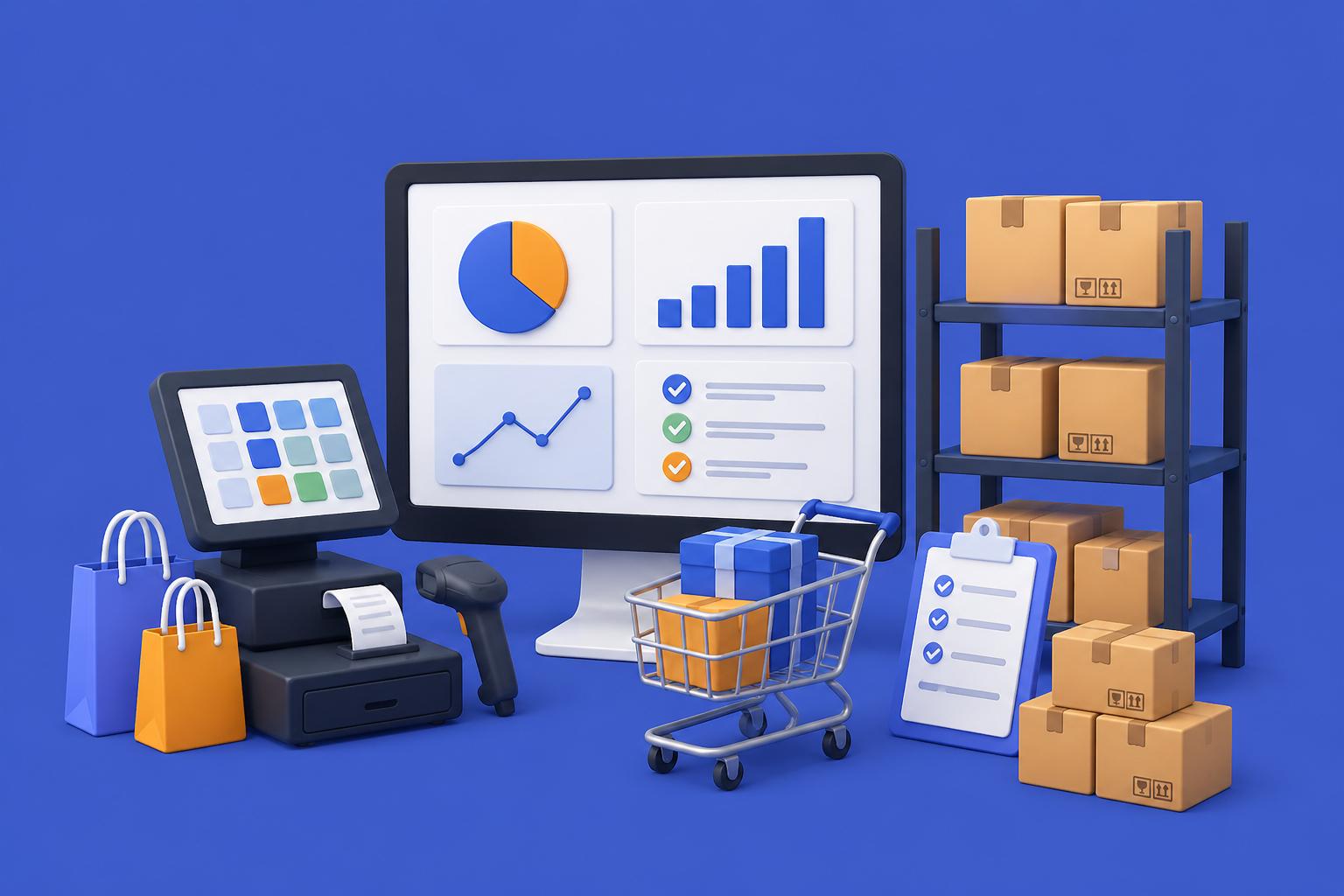
Proper management of a retail store is no longer a simple task. With increased competition, multiple sales channels, and demanding customers, businesses need tools that provide organization and control. This is where ERP (Enterprise Resource Planning) comes in—a system that integrates all business functions into a single platform.
Let’s look at how an ERP specifically helps organize sales and inventory.
📊 What is ERP in retail?
ERP is an integrated information system that connects sales, inventory, accounting, and procurement. For retail stores, it means all data is updated in real time, reducing errors and increasing efficiency.
💳 Real-time sales management
🔹 Instant transaction recording
Every sale made at the checkout is automatically recorded in the system. No manual entry is required, significantly reducing errors.
🔹 Sales channel integration
Whether you sell in a physical store, through an e-shop, or on marketplaces, ERP gathers all sales in one place.
🔹 Sales analytics
ERP provides reports such as:
Which products sell the most
What times of day have the highest traffic
Which customers buy most frequently
These insights help businesses make better decisions.
📦 Smart inventory management
🔹 Automatic stock updates
Each sale automatically reduces inventory levels. No manual checks are needed.
🔹 Low stock alerts
ERP can notify you when a product reaches a low stock level, allowing timely reordering.
🔹 Multi-warehouse tracking
If a business has more than one storage location, ERP allows full control of all warehouses from a single dashboard.
🔄 Integration of sales & inventory
One of the biggest advantages of ERP is the connection between these two functions:
When a sale occurs → inventory is updated
When products are received → availability is updated
When a return happens → the item is returned to stock
This ensures the business always has an accurate view of its products.
🧾 Reduced errors & costs
ERP automation significantly reduces:
Human errors
Excess ordering
Product shortages
As a result, costs are reduced and profitability increases.
📈 Improved customer service
With ERP:
Employees instantly know product availability
Orders are fulfilled faster
Customers receive more reliable service
Speed and accuracy make a big difference in customer experience.
⚙️ Automation that makes a difference
Modern ERP systems offer:
Automatic supplier order creation
Scheduled reports
Promotions and discount management
These automations free up time for more strategic tasks.
🚀 Why it is essential today
In a fast-moving market, information is power. An ERP provides:
Full visibility of the business
Faster decision-making
Competitive advantage
It is not just a tool, but an investment in growth.
✅ Conclusion
Using ERP in retail stores transforms the way they operate. From sales organization to inventory management, everything becomes simpler, faster, and more reliable.
If you want to reduce errors, increase efficiency, and have full control of your business, adopting an ERP is a step worth taking.
👉 Sign up for free and try all the features of eFluper.