In today’s competitive business world, resources are limited and competition is fierce. Companies are constantly looking for ways to reduce operating costs and increase efficiency. An ERP (Enterprise Resource Planning) system can be the most effective ally in this effort. Let’s see how.
📊 What is ERP?
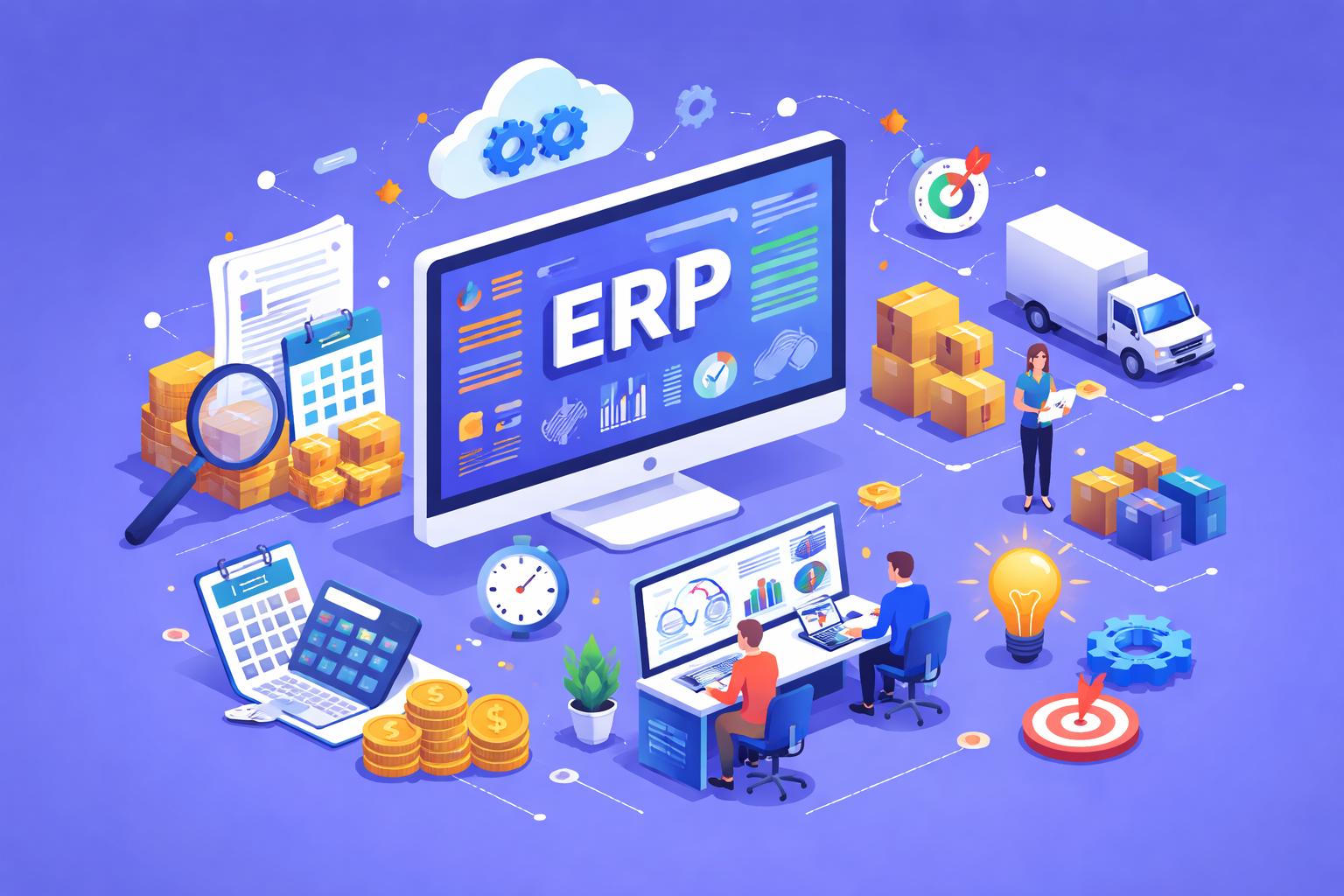
An ERP system is a comprehensive software platform that integrates all key business functions into a single system: accounting, inventory, sales, procurement, human resources, production, and more.
By using an ERP, businesses gain a complete, real-time view of their processes, reducing the need for multiple separate systems and increasing efficiency.
💡 Eliminating Duplicate Work
Many businesses face the problem of entering the same data into multiple systems. This not only raises operating costs but also increases errors.
With an ERP:
All data is entered once.
Information is automatically updated across all departments.
Employees save time and the need for additional staff is reduced.
Result: Lower labor costs and fewer mistakes.
🏭 Optimizing Inventory
Inventory management is critical for any business. Excess or insufficient stock leads to higher costs or lost sales.
An ERP system:
Tracks inventory levels in real time.
Forecasts future needs based on sales and trends.
Automates supplier orders.
Result: Lower storage costs, reduced waste, and avoidance of stock shortages.
🕒 Process Automation
Many repetitive tasks, such as invoicing, order entry, or customer management, can be automated through an ERP.
Benefits:
Time savings.
Reduced human errors.
Employees can focus on more strategic tasks.
Result: Lower operational costs and higher productivity.
📉 Accurate Financial Control
ERPs provide detailed, real-time financial reports, allowing businesses to track income and expenses accurately.
This enables:
Quick identification of areas wasting resources.
Better decision-making for investments and cost-cutting.
Avoiding delays and inaccuracies in accounting.
The ERP thus becomes a tool for reducing unnecessary expenses.
🌟 Improved Customer Service
Good customer service can indirectly reduce costs. An ERP:
Tracks orders, shipments, and customer requests.
Allows quick response to issues.
Minimizes the need for repeated contacts and corrections.
Result: Reduced customer handling costs and higher satisfaction.
🔗 Department Integration
In traditional businesses, each department operates with its own system, causing delays and unnecessary coordination costs.
With an ERP:
All departments share data in real time.
Coordination happens seamlessly.
Bureaucracy is minimized.
Result: Lower operational costs and smoother workflows.
📈 Strategic Planning and Analysis
An ERP provides:
Forecasting and analytics capabilities.
Tools to optimize processes.
Strategic insights for cost reduction.
With this information, businesses can prevent costly problems and make smarter decisions.
✅ Conclusion
Implementing an ERP system is not just a technological step, but a strategic move to reduce operating costs.
Benefits include:
Reducing duplicate work and human errors.
Optimizing inventory and automating processes.
Accurate financial control and better customer service.
Department integration and strategic analysis.
Overall, an ERP allows businesses to operate more efficiently, save resources, and increase profitability.
👉 Sign up for free and try all the features of eFluper.