🚀 Why service invoicing matters
Service invoicing is one of the most critical processes for businesses that provide consulting, technical support, accounting, legal, educational, or professional services. Accurate billing, proper charge tracking, and compliance with tax regulations directly impact revenue, cash flow, and customer satisfaction.
In today’s fast-paced business environment, relying on manual invoicing methods can lead to delays, errors, and inefficiencies. This is where an Enterprise Resource Planning (ERP) system becomes a valuable asset, transforming invoicing into a streamlined and automated process.
⚙️ What is service invoicing through an ERP?
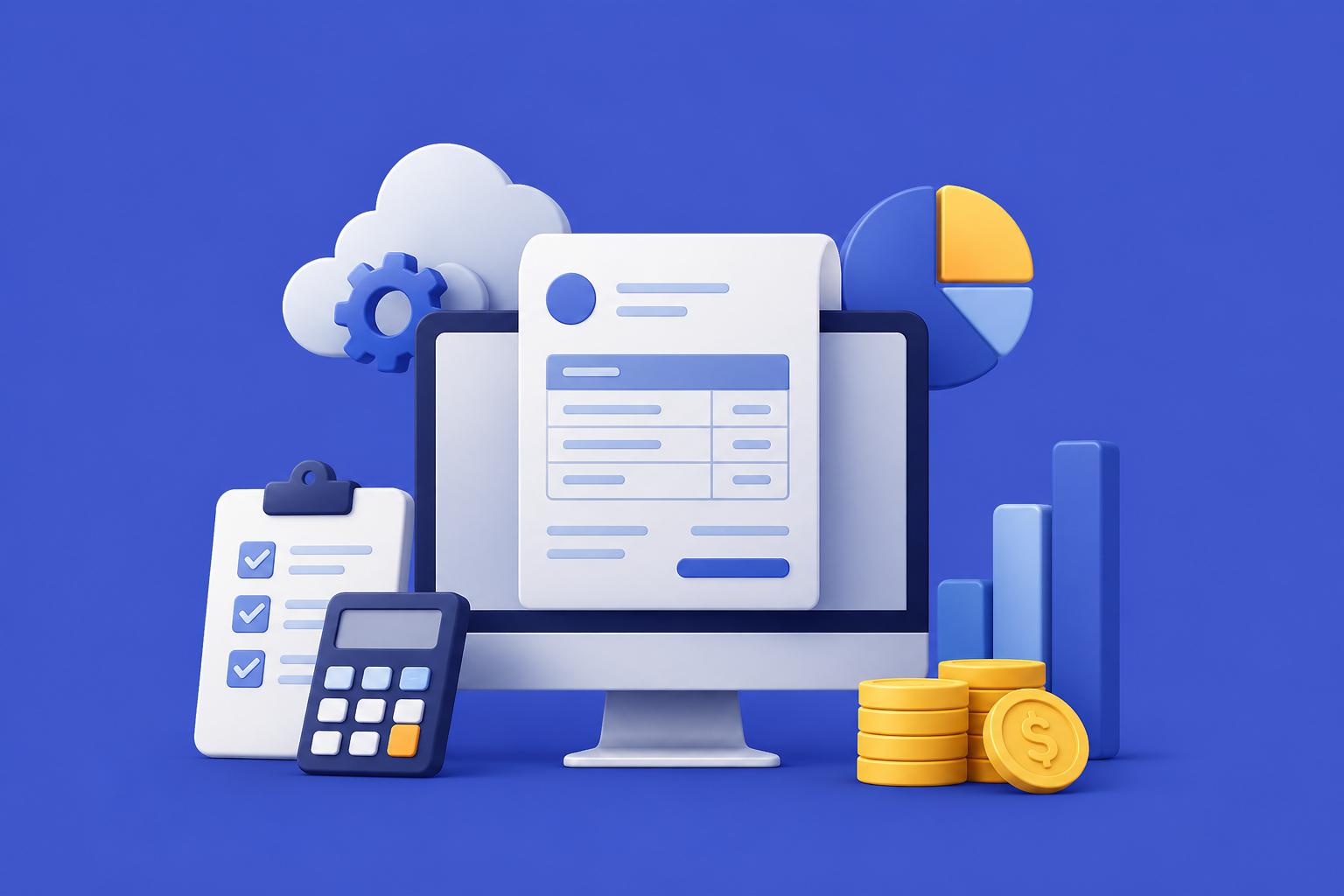
Service invoicing through an ERP system allows businesses to generate invoices directly from a centralized platform using data that already exists within the system. Information such as project details, service hours, contracts, subscriptions, and customer agreements can be automatically converted into accurate invoices.
Instead of entering the same information multiple times, employees can access all relevant data in one place, reducing administrative workload and improving operational efficiency.
⏱️ Save time and reduce errors
Manual invoicing often involves repetitive tasks that increase the likelihood of mistakes. Incorrect pricing, missing service charges, and data entry errors can negatively affect both profitability and customer trust.
With an ERP system:
✅ Invoice data is generated automatically.
✅ Tax calculations are applied accurately.
✅ Customer records remain updated in real time.
✅ Recurring invoices can be scheduled and processed automatically.
By automating these tasks, businesses can significantly reduce administrative costs while allowing employees to focus on higher-value activities.
📊 Gain complete visibility into business performance
An ERP system does much more than create invoices. It provides real-time insights into financial and operational performance, helping managers make informed decisions.
Businesses can easily track:
📈 Revenue by customer or account.
📈 Profitability by project or service.
📈 Outstanding invoices and payment status.
📈 Sales trends and business growth opportunities.
Having access to accurate, up-to-date information enables organizations to improve forecasting, budgeting, and strategic planning.
🔗 Seamless integration across departments
One of the greatest advantages of ERP software is its ability to connect different business functions within a single platform.
Service invoicing can be directly linked to:
👥 Customer Relationship Management (CRM)
📂 Project Management
🛒 Sales and Quotations
💰 Accounting and Financial Management
📦 Inventory and Procurement, where applicable
This integration eliminates duplicate data entry and ensures that all departments work with the same information, improving collaboration and operational accuracy.
☁️ Electronic invoicing and regulatory compliance
Modern ERP solutions support electronic invoicing and integration with government tax platforms, helping businesses comply with local and international regulations.
Key benefits include:
📄 Automated invoice submission.
🔒 Secure data storage and protection.
📑 Digital document archiving.
✅ Reduced risk of compliance and tax reporting errors.
As regulations continue to evolve, ERP systems help organizations remain compliant while simplifying administrative processes.
🎯 Conclusion
Service invoicing through an ERP system is more than just a billing solution—it is a strategic tool that enhances efficiency, accuracy, and financial control. By automating invoicing processes, reducing manual errors, and providing real-time business insights, ERP software empowers companies to improve customer service and support sustainable growth.
As businesses increasingly embrace digital transformation, implementing an ERP system for service invoicing is becoming a necessity rather than a luxury. Organizations that invest in modern ERP technology gain a competitive advantage through faster operations, better decision-making, and stronger financial performance.
👉 Sign up for free and try all the features of eFluper.