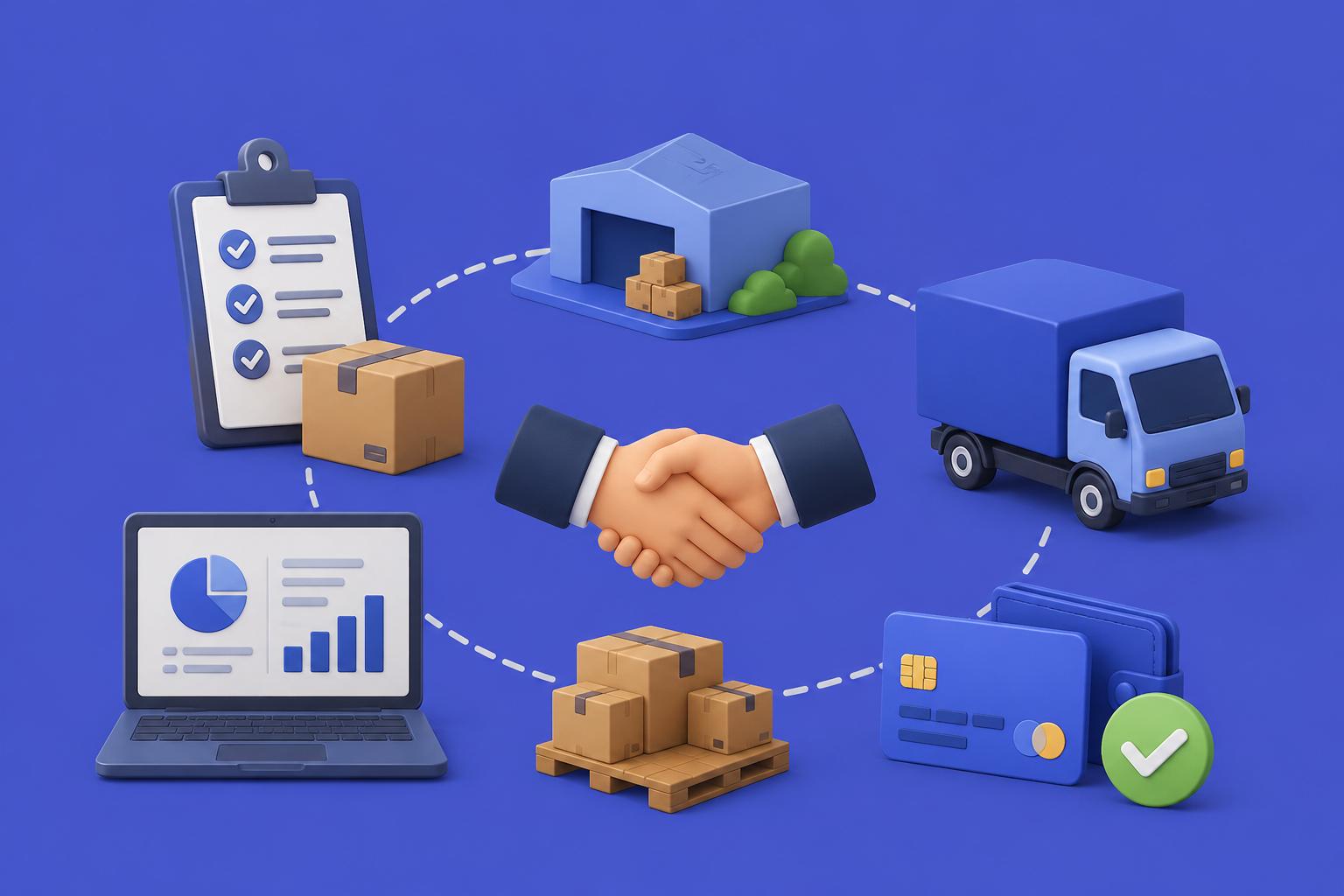
Effective supplier management is essential for the smooth operation of any business. From creating purchase orders to processing invoice payments, every stage requires accuracy, transparency, and efficient coordination. A modern Enterprise Resource Planning (ERP) system centralizes these processes into one platform, reducing errors, saving time, and providing greater control over procurement activities.
📋 Purchase order creation and tracking
The supplier management process begins with creating purchase orders. An ERP system enables businesses to:
Create and manage purchase orders.
Track the status of every order.
Monitor expected delivery dates.
View outstanding orders in real time.
This helps eliminate duplicate orders, prevent delays, and ensure products arrive when needed.
📦 Automated goods receipt management
When products are delivered, the ERP automatically updates inventory records and compares received goods against the original purchase order.
Key benefits include:
Instant inventory updates.
Identification of shortages or discrepancies.
Reduced manual data entry.
Complete transaction history.
As a result, businesses always know what has been received, when it arrived, and which supplier delivered it.
💰 Invoice verification
A powerful ERP system automatically matches:
Purchase Order
Goods Receipt
Supplier Invoice
This Three-Way Matching process significantly reduces accounting errors and prevents payments for products that were never received or incorrectly invoiced.
It also gives finance teams complete visibility into outstanding supplier obligations.
💳 Payment management
Managing supplier payments efficiently is just as important as managing purchases.
An ERP allows businesses to:
Schedule supplier payments.
Track payment due dates.
Manage credit limits.
Record completed payments.
Automatically update accounting records.
This ensures suppliers are paid on time while maintaining healthy business relationships.
📊 Supplier performance evaluation
An ERP does more than store data—it provides valuable insights for smarter purchasing decisions.
Businesses can evaluate suppliers based on:
Delivery performance.
Product quality.
Reliability and consistency.
Frequency of delays.
Overall procurement costs.
These insights help organizations strengthen supplier relationships and negotiate better agreements.
🔄 Automation that saves time
Automation is one of the greatest advantages of an ERP system.
It can automate tasks such as:
Purchase approval workflows.
Delay notifications.
Payment reminders.
Automatic document generation.
Real-time procurement reporting.
By reducing repetitive administrative work, employees can focus on strategic planning and supplier relationship management.
📈 Complete procurement visibility
An ERP provides a centralized view of the entire purchasing process.
Decision-makers can instantly see:
Total purchases.
Active suppliers.
Outstanding invoices.
Upcoming payments.
Overall procurement costs.
This level of visibility supports better budgeting, cash flow management, and more informed business decisions.
✅ Conclusion
Supplier management extends far beyond placing purchase orders. It covers the complete procurement lifecycle—from sourcing products and receiving deliveries to invoice verification, payment processing, and supplier evaluation. A modern ERP system streamlines every stage, reduces operational costs, minimizes errors, and delivers complete visibility across procurement operations. By automating workflows and providing accurate, real-time data, businesses can build stronger supplier relationships, improve operational efficiency, and make smarter purchasing decisions that support long-term growth.
👉 Sign up for free and try all the features of eFluper.