🧠 Introduction
In today’s business world, data management is critical for a company’s success. For many years, Microsoft Excel has been the main tool for financial records, inventory tracking, sales, and analysis. However, in recent years, a new type of system has started replacing it: Web ERP systems.
But what exactly is a Web ERP, and why is it considered superior to Excel?
🌐 What is a Web ERP?
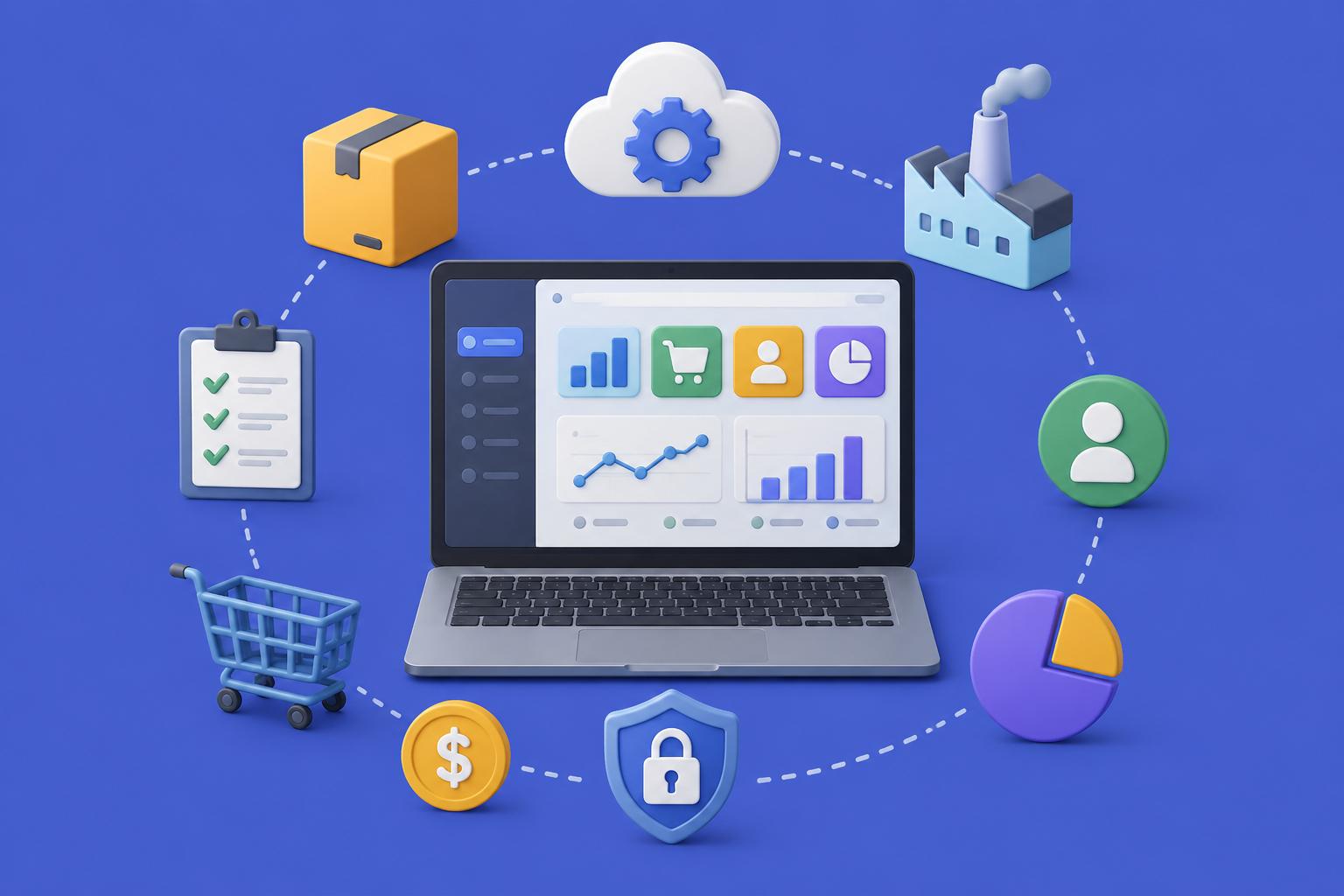
A Web ERP (Enterprise Resource Planning) is an integrated information system that operates through the internet and connects all departments of a business into a single unified platform.
📌 Simply put:
A Web ERP is a “central system” that manages:
📦 Inventory
💰 Accounting
🛒 Sales
👥 Customers
🏭 Production
📊 Reports
All in real time and accessible from any device with internet access.
📉 Why is excel no longer enough?
Excel is a powerful tool, but it has limitations as a business grows.
❌ 1. It is not a centralized system
Each Excel file is independent, which leads to:
Duplicate entries
Errors from different file versions
Poor collaboration between teams
❌ 2. No real-time data
If two people edit the same file:
Changes may be lost
There is no instant synchronization for everyone
❌ 3. Limited security
Excel files:
Can be easily copied
Have limited access control
Do not always track changes reliably
❌ 4. Poor scalability
As a business grows:
Files become complex
Errors increase
Management becomes chaotic
🚀 Advantages of a Web ERP
A Web ERP solves all the above problems and offers much more.
🔗 1. Everything in one system
No need for multiple files
All departments work with the same data
⏱️ 2. Real-time updates
Inventory updates automatically
Sales are recorded instantly
☁️ 3. Access from anywhere
Works on mobile, tablet, or computer
No installation required
🔐 4. High security
Web ERP systems provide:
User permissions
Change history (audit logs)
Data encryption
📊 5. Automated reports
Instead of manual Excel work:
Reports are generated automatically
Dashboards show charts and KPIs
🤝 6. Better collaboration
All departments (sales, accounting, warehouse) work in the same system without confusion.
🆚 Web ERP vs Excel
Feature | Excel | Web ERP |
ntral database | ❌ | ✅ |
Real-time updates | ❌ | ✅ |
|---|---|---|
Team collaboration | Limited | Excellent |
Security | Low | High |
Scalability | Difficult | Easy |
🏢 Where are Web ERPs used?
Web ERP systems are used in:
🏭 Manufacturing industries
🛍️ Retail stores
🚚 Logistics companies
💼 Service businesses
🏢 Small, medium, and large enterprises
🔮 Why the future belongs to Web ERPs
Digital transformation requires:
Speed
Accuracy
Collaboration
Automation
Excel was not designed for these needs. Web ERPs, on the other hand, are built for modern business requirements and continuously evolve with AI, automation, and cloud technologies.
🧩 Conclusion
Excel remains useful for simple tasks, but it cannot support the needs of a modern business.
A Web ERP:
Unifies information
Reduces errors
Increases productivity
Improves decision-making
📌 In short:
Excel is a tool, while a Web ERP is a complete business management system.
👉 Sign up for free and try all the features of eFluper.