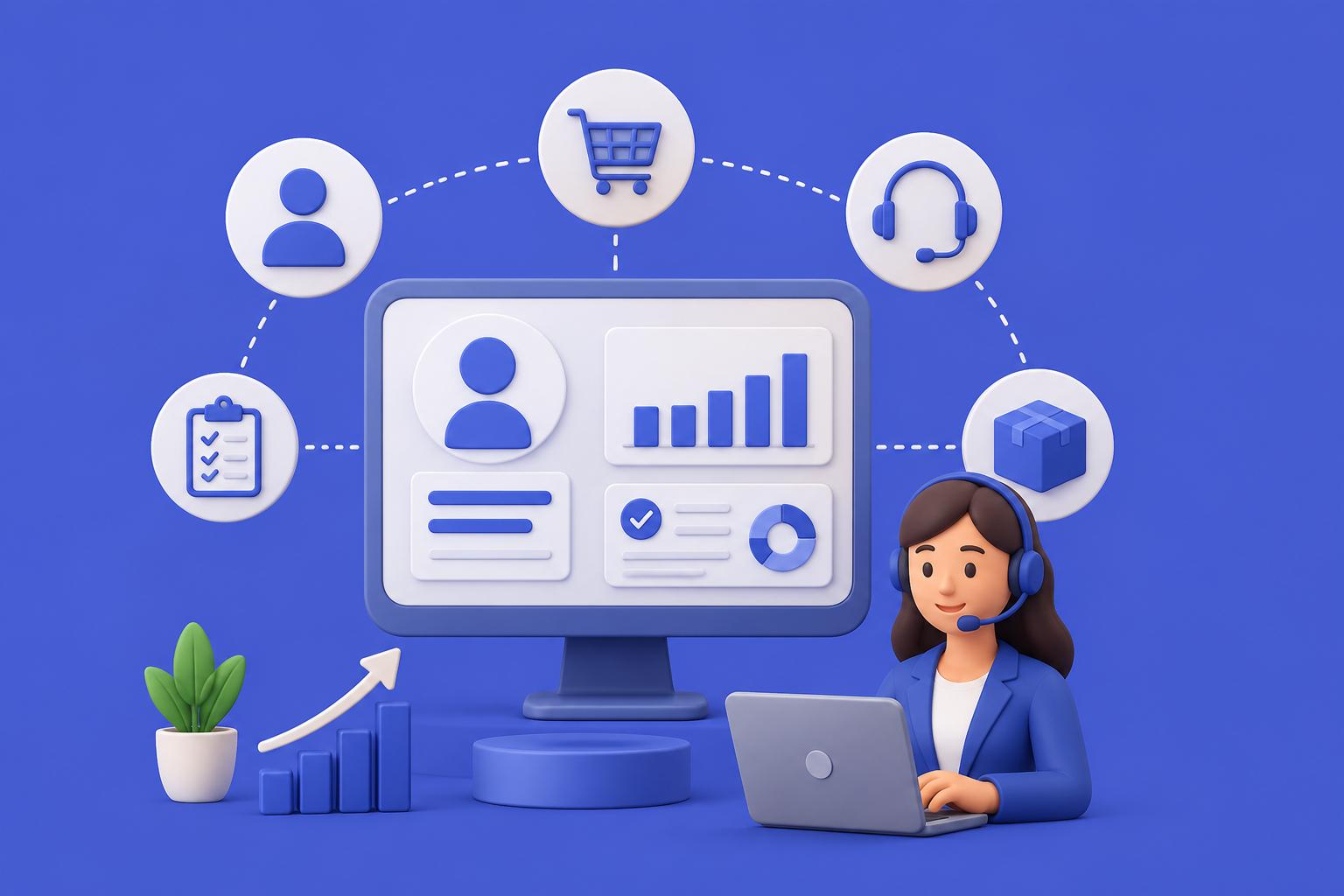
In today's competitive market, customer experience has become one of the most important factors for business success. Customers expect fast responses, personalized service, and consistent communication across every interaction. An Enterprise Resource Planning (ERP) system helps businesses meet these expectations by connecting departments, automating processes, and providing instant access to customer information.
👤 1. A complete customer profile
One of the biggest advantages of an ERP system is the ability to store all customer information in a single place. Sales history, invoices, support requests, payments, and communication records are available instantly.
This allows employees to understand customer needs without searching through multiple systems, leading to quicker and more personalized interactions.
⚡ 2. Faster response times
Customers appreciate quick service. With an ERP system, employees can immediately check product availability, order status, delivery schedules, or payment history.
Instead of transferring customers between departments, staff can resolve questions during the first interaction, reducing waiting times and improving satisfaction.
🎯 3. Personalized customer experiences
Modern customers expect businesses to know their preferences. ERP software helps companies analyze purchasing behavior and customer history to provide personalized recommendations, special offers, and relevant communication.
This creates stronger relationships and encourages long-term customer loyalty.
🔄 4. Better collaboration between departments
Excellent customer service depends on teamwork. ERP connects sales, customer support, inventory, accounting, and logistics into one centralized platform.
When every department works with the same real-time information, communication improves, mistakes decrease, and customers receive accurate updates throughout their journey.
📦 5. Accurate order management
Order errors can quickly damage customer trust. ERP automates order processing, inventory updates, invoicing, and shipping coordination.
Customers receive correct products on time while employees can monitor every stage of the process, reducing delays and improving reliability.
📈 6. Data-driven customer support
ERP systems generate valuable reports about customer satisfaction, purchasing trends, support performance, and service quality.
Managers can identify recurring issues, measure response times, and continuously improve customer service based on real data instead of assumptions.
🤝 7. Building long-term customer loyalty
Exceptional service is about consistency. By delivering accurate information, faster support, personalized communication, and reliable order fulfillment, ERP helps businesses build trust with their customers.
Satisfied customers are more likely to return, recommend the business to others, and become long-term advocates for the brand.
✅ Conclusion
An ERP system is much more than an operational management tool—it is a powerful solution for improving customer experience. By centralizing information, streamlining workflows, and enabling personalized service, businesses can respond faster, reduce errors, and strengthen customer relationships. In a market where customer expectations continue to rise, investing in ERP technology is a strategic step toward delivering outstanding service and sustainable business growth.
👉 Sign up for free and try all the features of eFluper.