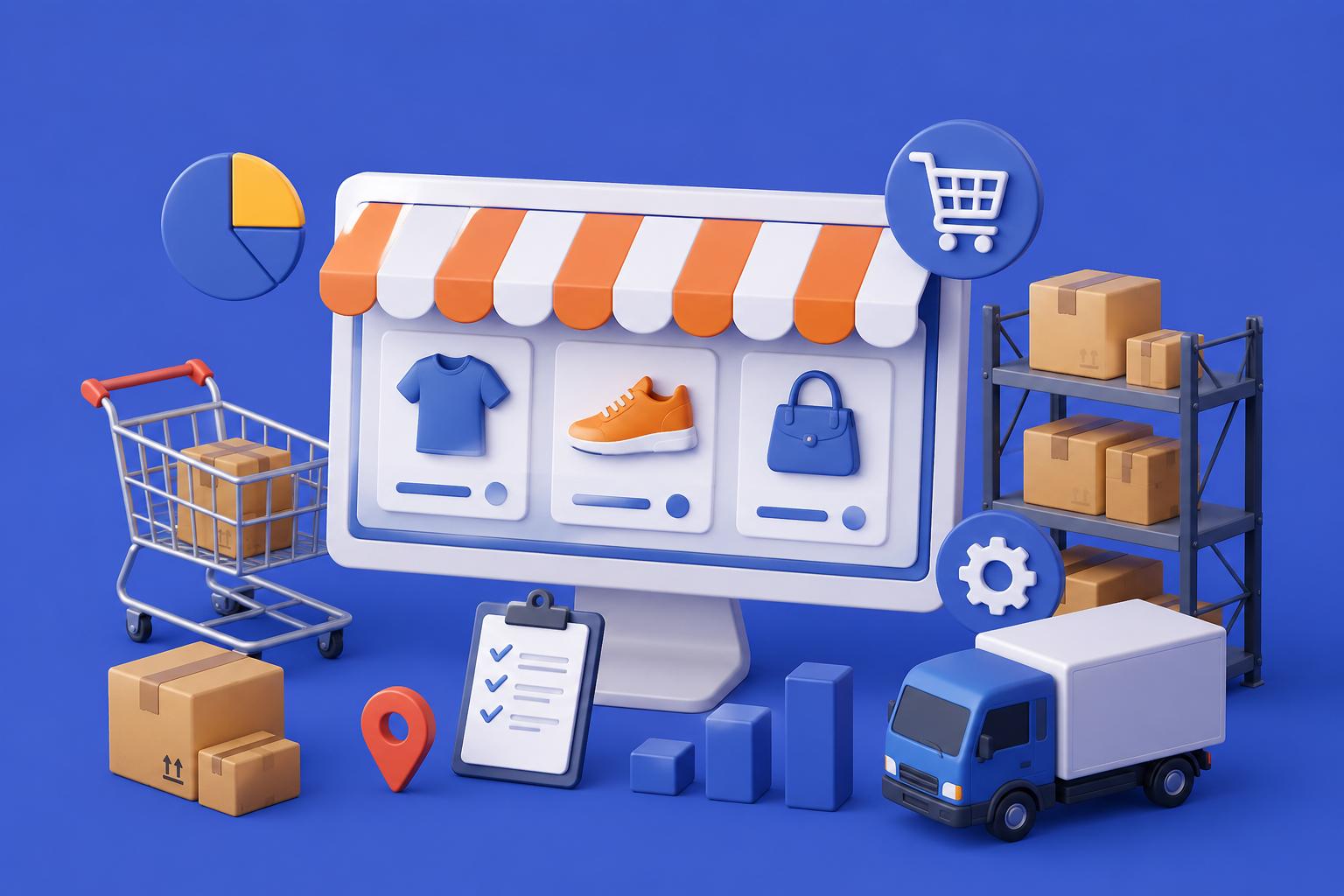
Running a modern e-commerce store requires speed, organization, and real-time updates at every stage of the sales process. As the number of orders and product codes increases, managing daily operations without a centralized system becomes more difficult. This is where the role of an ERP becomes essential.
An ERP (Enterprise Resource Planning) system helps eCommerce businesses organize products, inventory, orders, and daily workflows through a single centralized platform. As a result, companies can reduce errors, save time, and improve the overall customer experience.
📦 Centralized product management
One of the biggest advantages of an ERP system is having all product information stored in one place. Product descriptions, prices, categories, images, and stock availability can be updated quickly and efficiently.
This is especially useful for businesses with a large product catalog or companies selling through multiple channels. Changes only need to be made once and are automatically synchronized across all platforms without manual work.
This leads to better organization and helps prevent issues such as incorrect pricing or unavailable products appearing as in stock on the e-commerce website.
🚚 Real-time order organization
Orders are the “heart” of every online store. An ERP system helps automatically record and monitor every order from the moment it is placed until it is shipped.
Through a well-organized system, businesses can instantly know:
which orders are pending,
which have been invoiced,
which are being prepared for shipping,
and which have been completed.
Automating these processes significantly reduces management time and minimizes human errors. At the same time, customer support teams can provide faster and more accurate updates regarding order status.
📊 Better inventory control
Effective inventory management is critical for every e-commerce business. An ERP system provides continuous visibility into warehouse stock and helps track product availability in real time.
This allows businesses to:
avoid stock shortages,
identify high-demand products,
organize supplier orders more efficiently,
and reduce unnecessary overstock.
Having better inventory visibility improves operational efficiency and enhances the customer experience by reducing delays and order cancellations.
🔄 Automated processes
Daily repetitive tasks can consume a significant amount of time when handled manually. An ERP system helps automate many important business operations, including:
stock updates,
invoice generation,
shipping management,
product synchronization,
and payment tracking.
Automation increases productivity and allows teams to focus on more strategic activities such as sales growth and customer service improvement.
📈 Smarter business decisions
An ERP system does more than improve organization — it also helps businesses analyze valuable data. Through reports and performance statistics, companies can gain a clearer understanding of their operations.
For example, businesses can monitor:
which products sell the most,
which periods have increased demand,
which sales channels perform better,
and where delays or operational issues occur.
Access to organized and accurate data supports better decision-making and helps improve the overall strategy of an e-commerce business.
🤝 Improved customer experience
Strong internal organization directly affects the final customer experience. When orders are processed quickly, inventory is updated correctly, and operations run smoothly, the reliability of the online store increases.
Customers expect speed, consistency, and accurate communication. An ERP system helps businesses meet these expectations more effectively and build stronger trust with their audience.
✅ Conclusion
The growth of an e-commerce business comes with increasing operational demands and management challenges. An ERP system acts as a central tool that helps businesses efficiently manage products, orders, and inventory while automating essential processes.
When properly implemented, an ERP solution can reduce errors, save time, and improve the overall efficiency of daily e-commerce operations.
👉 Sign up for free and try all the features of eFluper.