Growing a business is an exciting journey, but it also comes with new challenges. As your customer base expands, orders increase, and your team grows, managing daily operations becomes more complex. This is where an Enterprise Resource Planning (ERP) system becomes a game-changer, helping businesses transition from small teams to efficient, scalable organizations.
🚀 Growth brings new challenges
In the early stages, many businesses rely on spreadsheets, emails, or separate software applications to manage different operations. While this may work initially, growth often leads to challenges such as:
📋 Duplicate data entries
⏳ Delays in customer service
📦 Difficulty managing inventory
💰 Limited visibility into financial performance
❌ Increased risk of human error
An ERP system centralizes all business processes into one platform, making operations more efficient and organized.
⚙️ What does an ERP system offer?
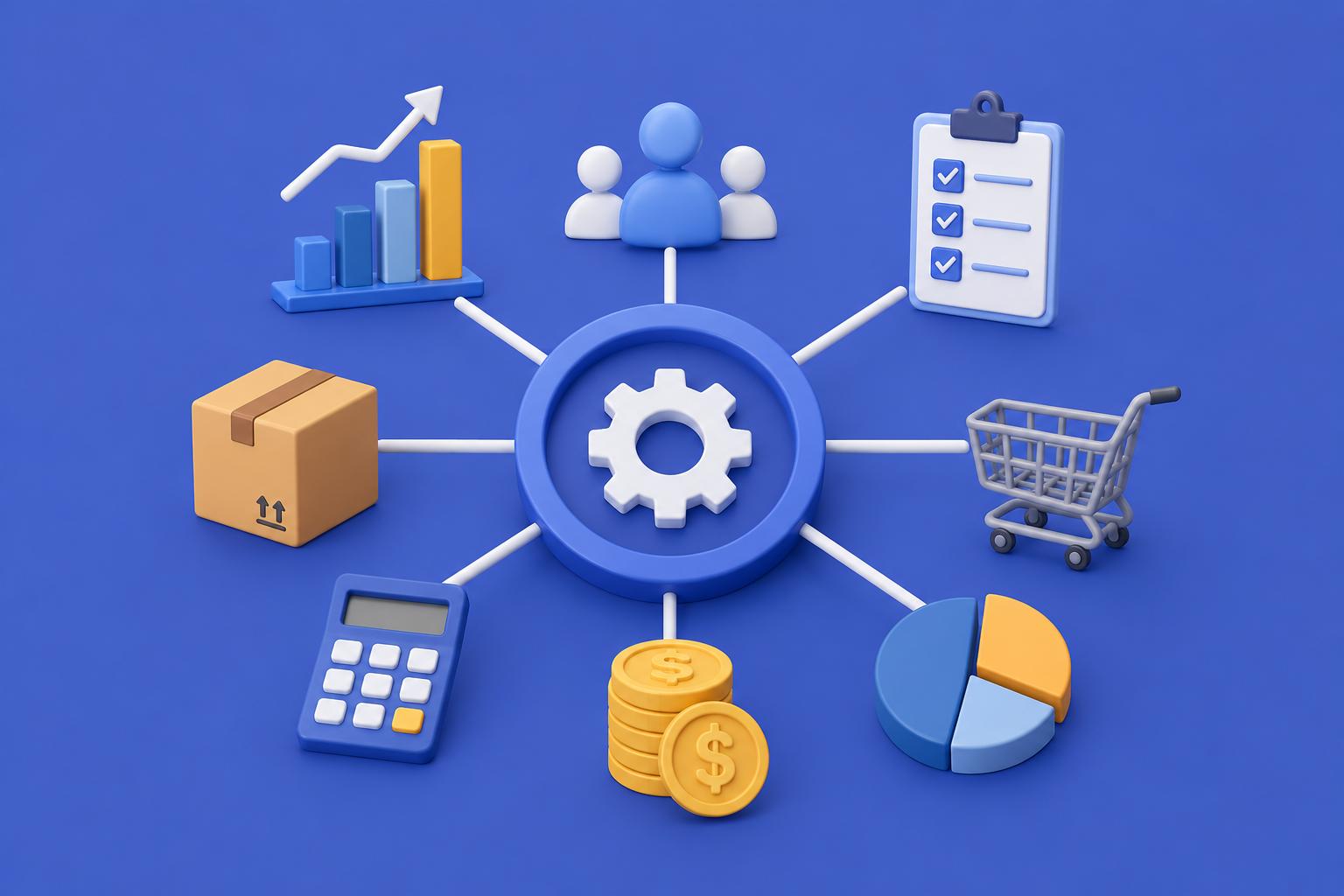
Think of an ERP system as the central hub of your business. It connects every department, ensuring that information flows seamlessly across the organization in real time.
Key benefits include:
📊 Centralized financial and accounting management
📦 Real-time inventory and supply chain tracking
👥 Customer and supplier management
🧾 Automated invoicing and order processing
📈 Business analytics and performance reporting
With all critical information stored in one place, employees spend less time searching for data and more time focusing on value-added tasks.
🤝 Better collaboration across teams
One of the biggest obstacles to business growth is poor communication between departments. Sales, finance, inventory, and customer service often work with separate systems, leading to inconsistencies and delays.
An ERP system changes this by:
📡 Providing a single source of accurate information
🔄 Updating data automatically across all departments
🎯 Supporting faster and more informed decision-making
🤝 Improving collaboration between teams
When everyone works with the same real-time data, productivity increases, and costly mistakes become far less common.
📈 Supporting long-term business growth
As a business expands, its operational needs evolve. A modern ERP system is designed to grow alongside the company, allowing organizations to scale without sacrificing efficiency.
An ERP can easily support:
🌍 Multiple business locations
🛒 E-commerce integration
👨💼 Additional users and departments
📦 Higher order volumes
📊 More advanced business processes
Instead of struggling with disconnected systems, businesses gain a solid technological foundation that supports sustainable growth.
💡 More time for strategy and innovation
Automation is one of the greatest advantages of an ERP solution. By reducing repetitive manual tasks, employees can focus on strategic initiatives rather than administrative work.
With an ERP system:
⏱️ Manual data entry is significantly reduced
📉 Human errors are minimized
📊 Managers gain instant access to business insights
🎯 Decisions are based on accurate, real-time information
This enables teams to dedicate more time to customer satisfaction, innovation, and long-term business development.
🏆 Conclusion
Moving from a small team to a well-organized business requires more than hiring additional employees—it requires the right technology. An ERP system is not simply a management tool; it is the backbone of a modern business, integrating processes, improving collaboration, and providing the visibility needed to make smarter decisions.
Companies that invest in ERP early are better equipped to streamline operations, improve efficiency, and adapt to future growth. In today's competitive business environment, organization and data-driven decision-making are no longer optional—they are essential for long-term success.
👉 Sign up for free and try all the features of eFluper.