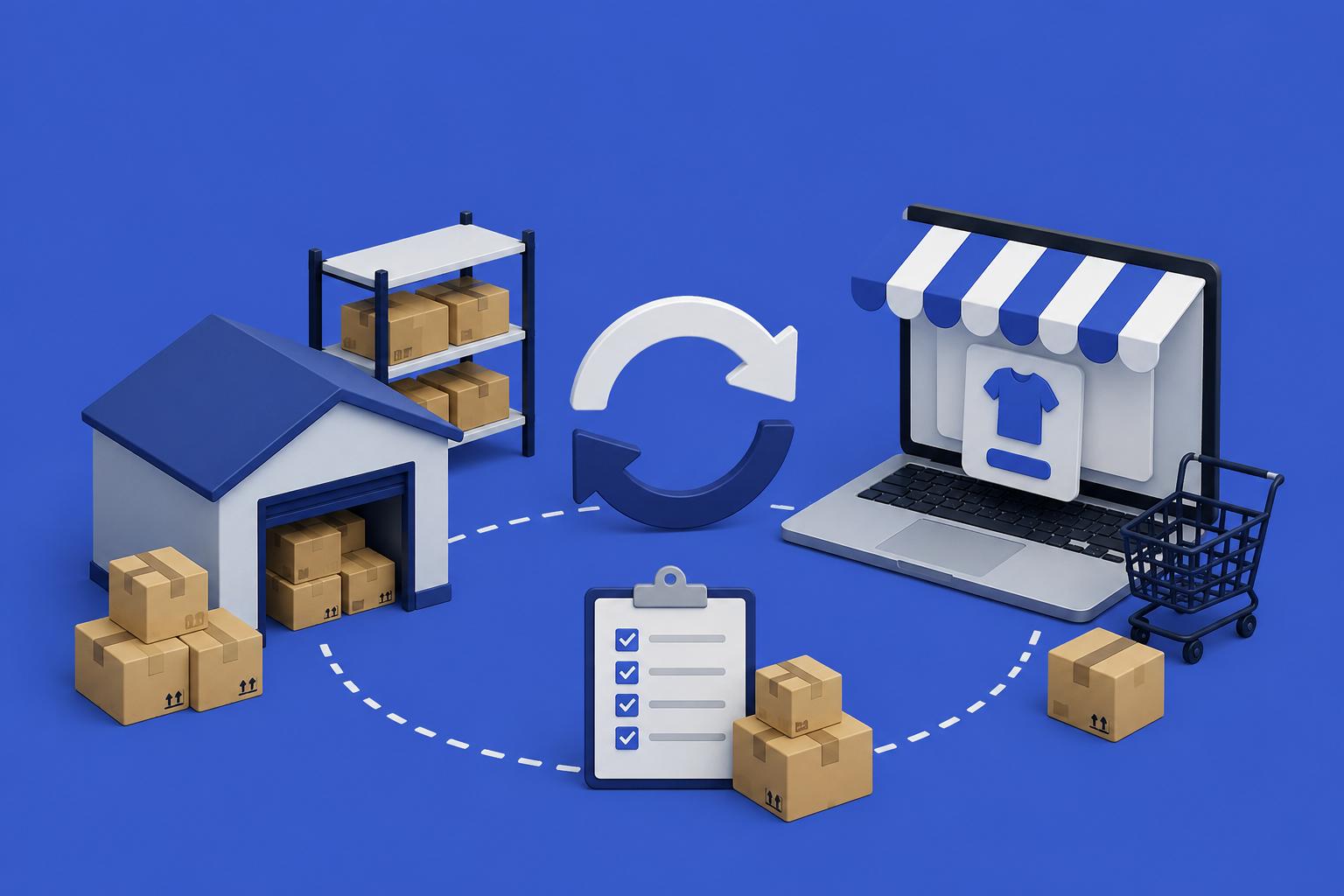
In today’s fast-paced e-commerce environment, efficient stock management is essential for maintaining customer satisfaction and maximizing profitability. Synchronizing inventory between an online store and a warehouse helps businesses avoid costly mistakes, streamline operations, and ensure accurate product availability across all sales channels.
🔄 Why inventory synchronization matters
One of the most common challenges online retailers face is inventory inconsistency. When stock levels in the warehouse are not synchronized with the e-commerce platform, products may appear available online even when they are out of stock. This can result in canceled orders, delayed deliveries, and disappointed customers.
Real-time inventory synchronization ensures that every stock movement—whether a sale, return, or restock—is automatically reflected across all systems. This accuracy improves customer trust and helps businesses operate more efficiently.
📊 Benefits of automated stock management
Automating inventory management offers numerous advantages for growing businesses:
✅ Real-time stock visibility across all channels.
✅ Reduced human errors caused by manual updates.
✅ Faster order processing and fulfillment.
✅ Improved inventory forecasting and replenishment planning.
✅ Enhanced customer experience and satisfaction.
✅ Better decision-making through accurate inventory data.
By implementing automated inventory solutions, businesses can save time, reduce operational costs, and focus on scaling their sales.
🏪 Common inventory management challenges
Even well-organized companies can encounter inventory-related issues.
📦 Overselling Products
When businesses sell through multiple channels such as e-commerce websites, physical stores, and online marketplaces, overselling can occur if stock levels are not updated instantly. This leads to order cancellations and damages brand reputation.
📉 Stock Shortages
Insufficient inventory monitoring can result in products running out unexpectedly. Stockouts not only cause lost sales opportunities but may also drive customers to competitors.
📋 Data Entry Errors
Manual inventory updates increase the risk of inaccuracies. Incorrect stock records can create discrepancies between the actual warehouse inventory and what customers see online.
⚙️ Technology solutions for better stock control
Modern inventory management relies on advanced technologies that connect e-commerce platforms with warehouse operations.
Enterprise Resource Planning (ERP) systems and Warehouse Management Systems (WMS) allow businesses to centralize inventory data and automate stock updates. Through API integrations, inventory information is exchanged seamlessly between systems, providing complete visibility in real time.
Additionally, barcode scanners, RFID technology, and mobile inventory applications help warehouse teams track product movements accurately and efficiently.
🚀 Best practices for effective inventory management
To optimize stock management between your e-commerce store and warehouse, consider implementing the following strategies:
📈 Monitor Inventory in Real Time
Use software that provides live inventory updates and visibility across all sales channels.
🔔 Set Low-Stock Alerts
Automated notifications help prevent stockouts by alerting managers when inventory reaches predefined thresholds.
📦 Conduct Regular Stock Audits
Routine inventory checks ensure system records match actual warehouse stock levels.
🔗 Integrate Your Systems
Connect your e-commerce platform with ERP or warehouse management software to eliminate manual processes.
📊 Analyze Sales Trends
Use historical sales data to forecast demand and maintain optimal inventory levels throughout the year.
🎯 Conclusion
Effective stock management between an e-commerce store and a warehouse is no longer optional—it is a critical component of business success. Companies that invest in inventory synchronization and automation can reduce errors, improve customer satisfaction, and increase operational efficiency.
By leveraging the right technology and following proven inventory management practices, businesses can transform their warehouse into a strategic asset that supports growth, improves profitability, and delivers a seamless shopping experience for customers.
👉 Sign up for free and try all the features of eFluper.